


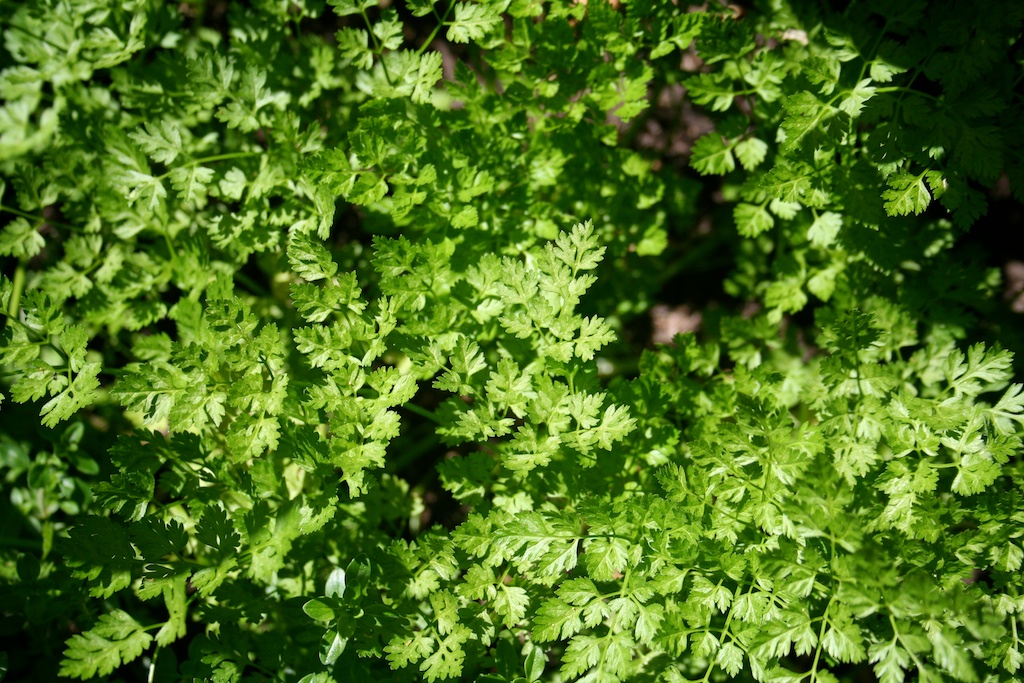
Anise flavoured chervil
If you haven’t planted your chervil yet, now is a good time to do so. Chervil, Anthriscus cerefolium, is a soft, tender annual herb with dainty, bright green, fern-like leaves and tiny white flowers in umbrella shaped heads. Flowers are followed by long thin black seeds. The leaves have a sweet anise flavour. Plants grow to about 40cm high and 30cm across and you can start harvesting leaves about 5 weeks after sowing seed. Continue Reading
By Penny Woodward, Janice Sutton, Karen Sutherland
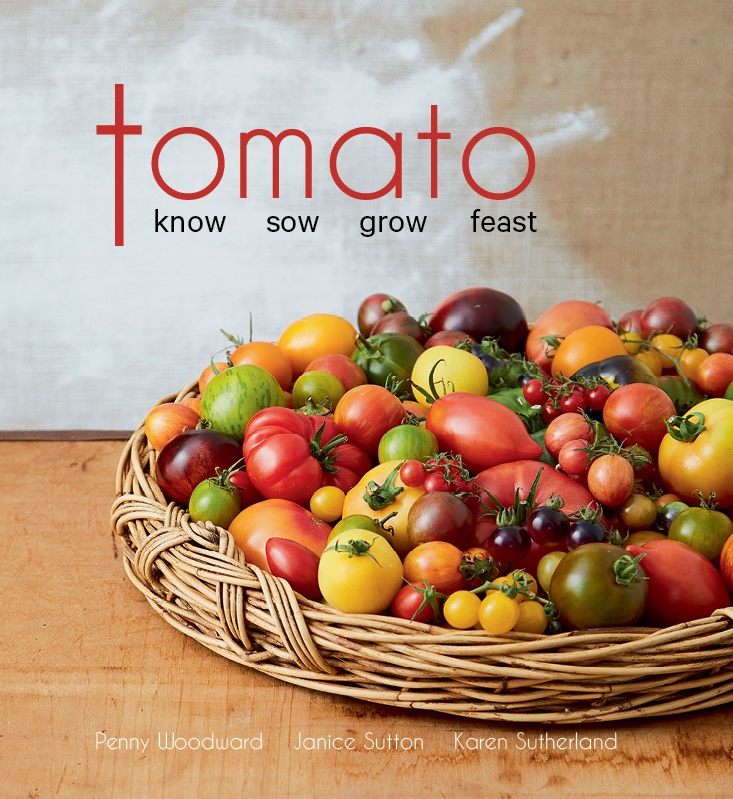
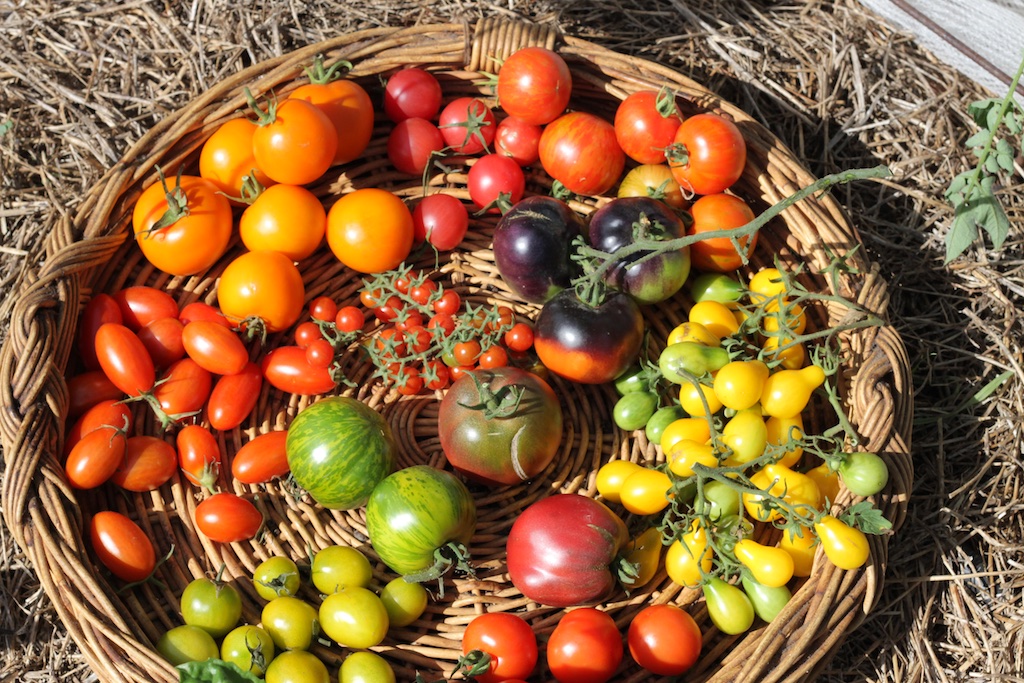
It’s tomato season again. So don’t forgot about our beautiful Tomato book, written for Australian conditions.
Tomato: know sow grow feast, written and published by Penny Woodward, Janice Sutton and Karen Sutherland. This book was awarded the Gold Medal in the House and Garden category of the Independent Publisher’s 2019 Awards (the IPPYs), judged against books from all over the world. Early in 2020, it shared the Book Laurel from the Horticultural Media Association Australia for the best gardening book in the previous two years. Hardcover. RRP $65, but $60 from this site.
Tomato: know, sow, grow, feast is a hardback book celebrating Australian heirloom tomatoes. These colourful heritage gems are full to bursting with juicy deliciousness and are enjoying a renaissance in Australia today. This book brims with information about heirloom tomatoes, so that tomato lovers throughout Australia can identify, learn to grow and enjoy them.
Tomato explains why a ‘red tomato is red’, why ‘real tomatoes’ taste so good, and why tomatoes are so ‘good for you’. The book also leads both experienced and aspiring gardeners through the practice of organic heirloom tomato growing and explores the history of heirloom tomato cultivars in Australia. It also provides, for the first time, a comprehensive description and extensive illustrated list of the more than 220 different cultivars of heirloom tomatoes available from seed suppliers in Australia today. What also sets Tomato apart, is the book’s extensive list and description of heirloom tomato pests and diseases, painstakingly researched by gardening expert Karen Sutherland, that includes an indispensable pest and disease chart to help gardeners identify and control them.
Uniquely too, for a gardening book, Tomato includes a substantial dedicated cooking and recipe section, where internationally award-winning cookbook author, Janice Sutton, explains not only how to preserve tomatoes and create the perfect tomato passatta, but also delves into the enticing realm of heirloom tomato variety flavours. The cooking section also contains more than 60 delicious recipes (each with its own beautiful full-page image) shared by a raft of talented chefs, cooks and passionate tomato lovers from throughout Australia and beyond – including some of Australia’s most respected culinary icons: Peter Gilmore, Stephanie Alexander, Maggie Beer, Sally Wise, Christine Manfield, Mark Olive, Matthew Evans and the Agrarian Kitchen’s Rodney Dunn.
It is for tomato lovers, gardeners and cooks; and all those who love beautiful books.
To find out who wrote what and to read the Table of Contents and see a couple of short extracts from my section, then Continue Reading
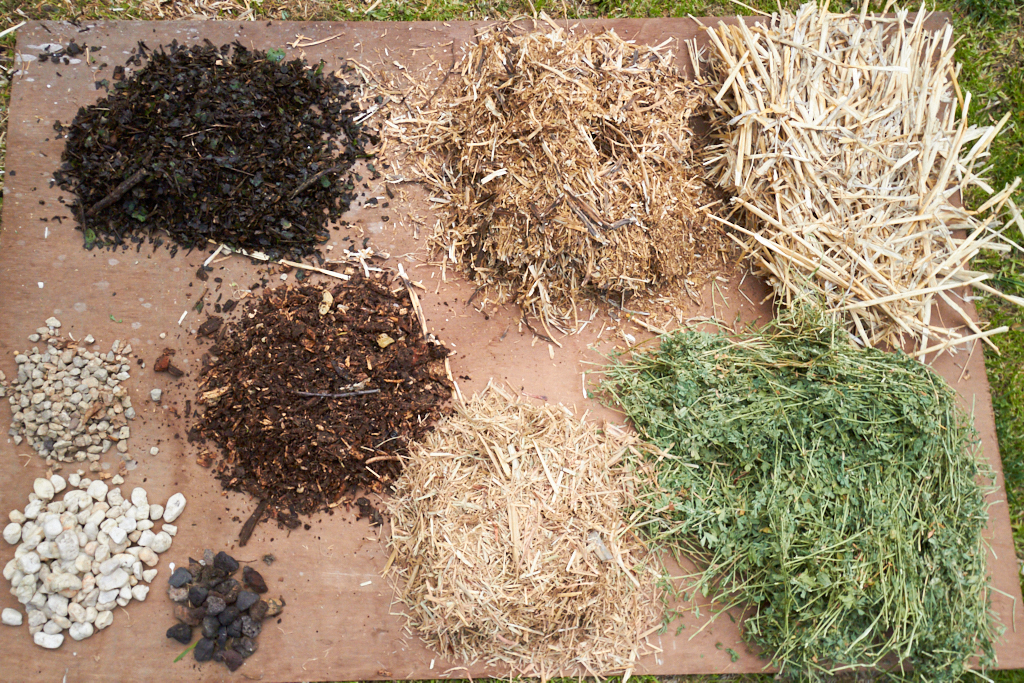
From top left: Compost, pea straw, straw, lucerne hay, sugarcane mulch bark and three different stone mulches.
Mulch is an essential element in an organic garden, and now is the time you should be thinking about adding it to your garden. Mulch is simply a layer of natural material, placed on the soil surface, that conserves moisture, protects and adds nutrients to the topsoil, and guards against climate extremes. It will also keep vegetable and herb leaves clean by preventing them from trailing in the dirt and stop fungal disease spores in the soil from bouncing onto leaves with raindrops. Continue Reading
by Penny Woodward
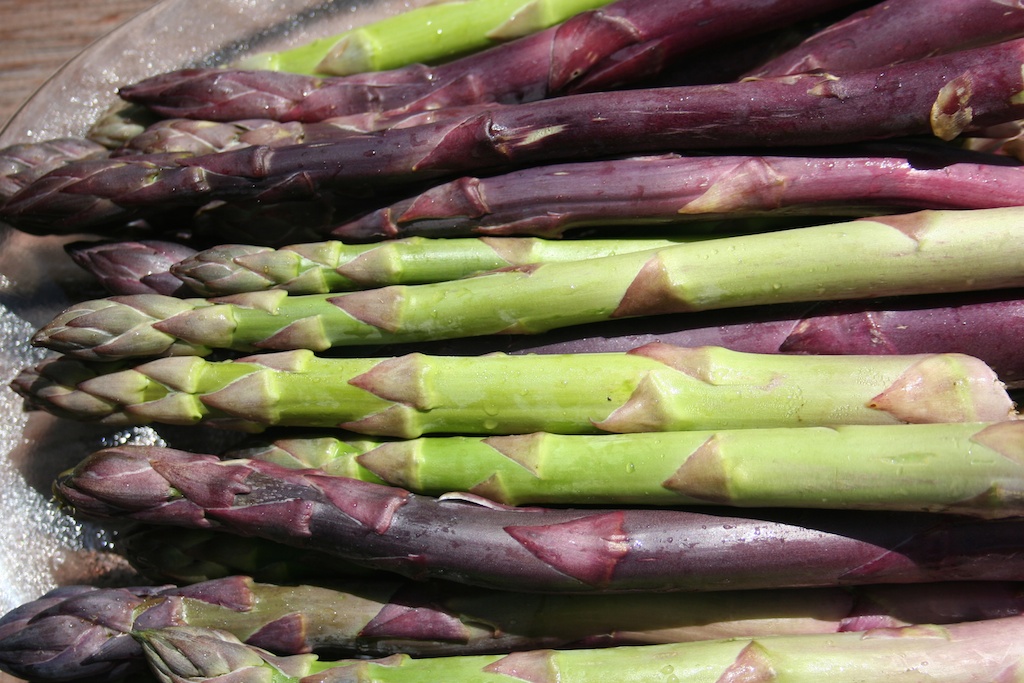
Asparagus spears
Asparagus (Asparagus officinalis) is a tough, rewarding, long term vegetable that once established will give many years of delicious, nutritious spears. A perennial plant, it is a member of the lily family (Liliaceae) and has been grown and eaten for more than 2,000 years. If you haven’t ever tried growing asparagus, you probably should, and now is a good time to plant it. Continue Reading
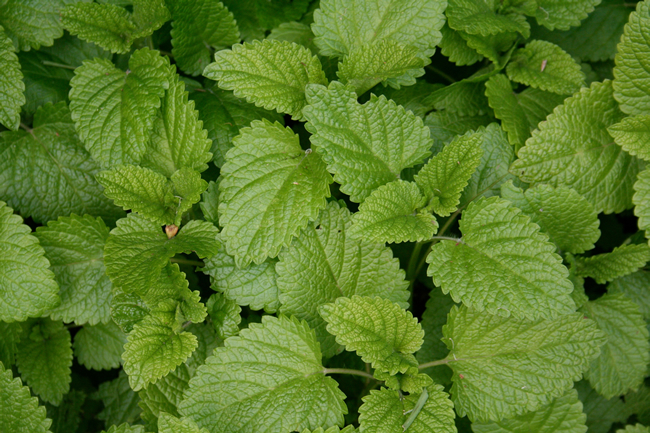
Lemon balm has a delicious sweet lemon flavour.
Tisanes or herb teas have been in vogue in southern Europe since Roman times. The fictional detective Hercule Poirot often needed a tisane after a particularly trying day. Today herb teas are increasing in popularity with the recognition of the harmful effects of too much coffee and ordinary tea. But aren’t herb teas expensive and don’t they taste awful? Not true! Especially if you grow your own, and can experiment with different combinations. Fresh or freshly dried leaves and flowers taste much better than the often musty plant material of questionable content and origin found in shops. Recent research by New York City high school students using simple DNA techniques, found that several herbal teas contain ingredients not listed on the pack. So if you grow and use your own, at least you can be certain about what you are drinking. Continue Reading
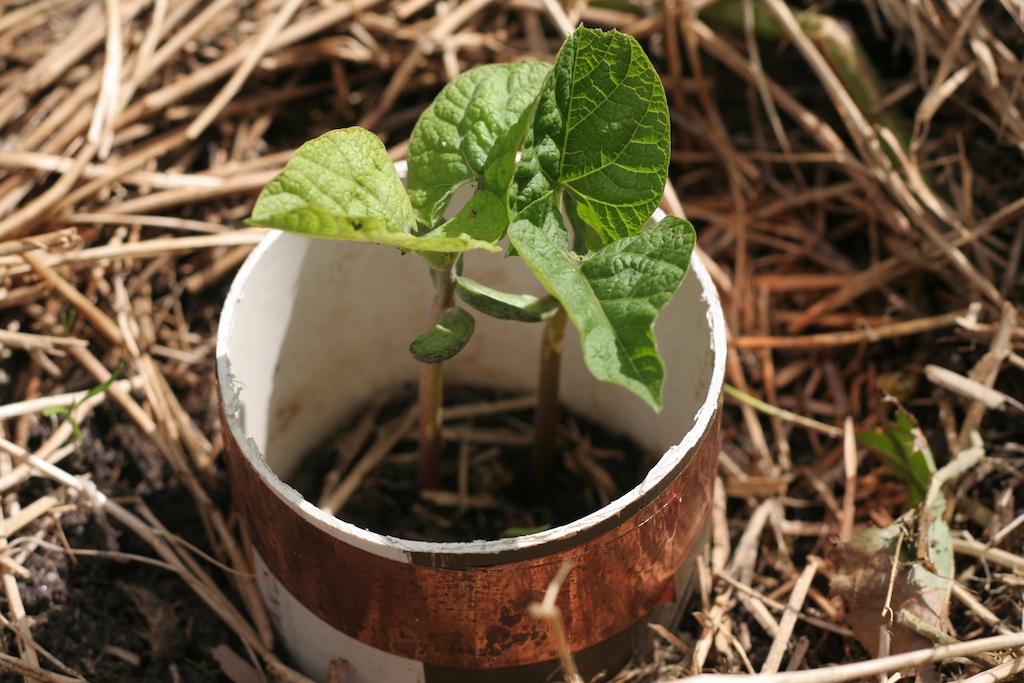
Bean seedlings protected from snails and slugs by a copper collar
Snails, snails and more snails. Our winter and spring have been very wet and as a result snail numbers increased dramatically. In my garden I used to find them in every dark corner and under every leaf. Every time I planted out a seed or seedling the fresh, succulent green leaves would provide supper for a snail. Even quite well established plants were disappearing under the onslaught. I had to do something. Over time I tried every recommended remedy, each with only limited success but finally I came up with a combination of solutions that seems to be keeping the numbers under control and protecting vulnerable plants. These tactics also work for slugs. This is the story of my private war waged, often under cover of darkness, on snails. Continue Reading

Gregory Moore, University of Melbourne
When it comes to fruit and vegetables, the most common battleground (for parents and public health experts alike) is getting people to eat them. But there’s a battle over semantics too, because many of the things we call “fruit” and “vegetables” … aren’t.
In botanical terms, a fruit is relatively easy to define. It is the structure that develops from the flower, after it has been fertilised, and which typically contains seeds (although there are exceptions, such as bananas).
But while there is no doubt that tomatoes, cucumbers and pumpkins are fruits in the botanical sense, any linguist will tell you that language changes and words take on the meaning that people broadly agree upon and use. We live in a linguistic democracy where the majority rules. Continue Reading
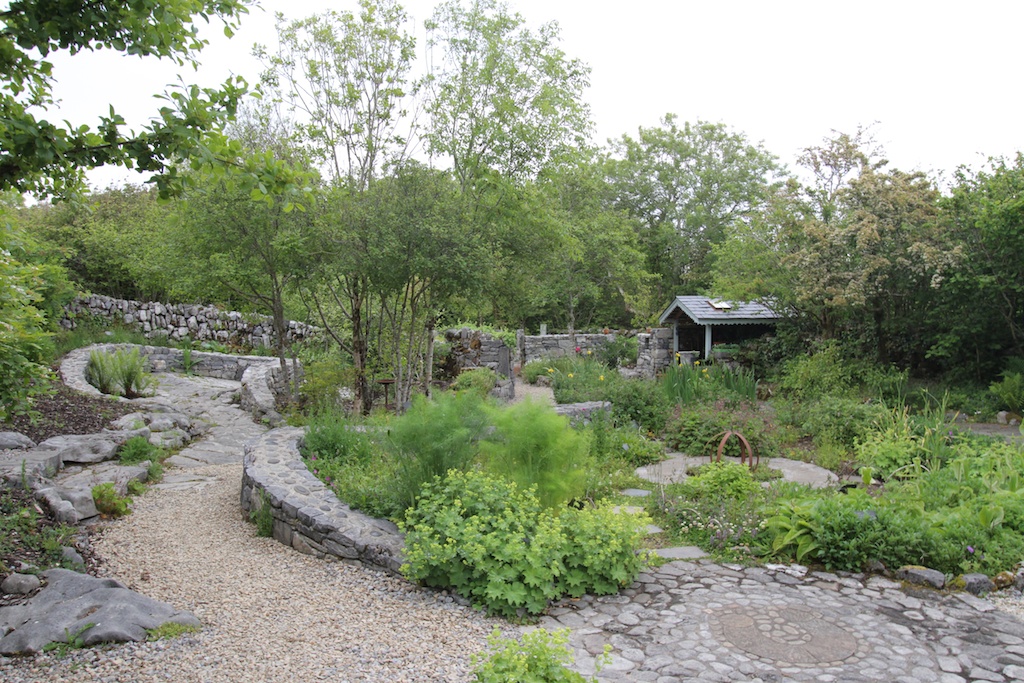
The Burren Perfumery herb garden
The Burren Perfumery was one of the highlights of our visit to Ireland last year. Not so much for the lovely creams, perfumes, soaps and more, that they produce. But for the herb garden. The creams are fabulous too (and we bought quite a few) but the herb garden was delightful. We were there in mid-June, so expected a riot of colour, but it had been a very cold wet spring so the colour palette was more muted. This however allowed us to see the beautiful sculptural stone walls and paving as well as the more subtle coloured flowers and the range of greens, greys and browns of the leaves and bark.
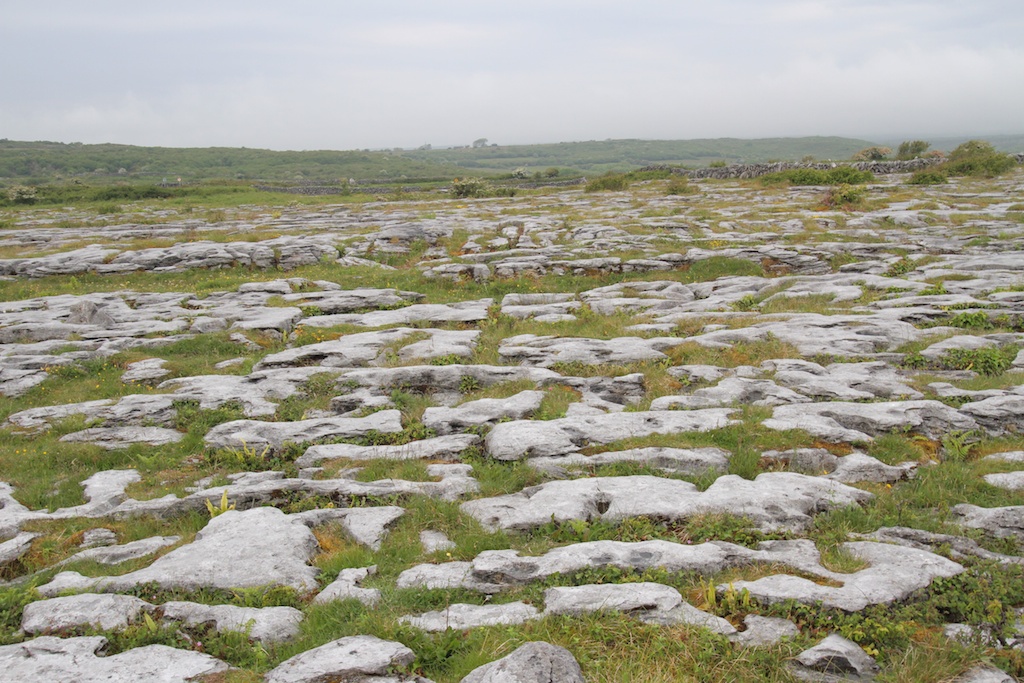
The Burren, showing clints and grikes
This beautiful wild region of Ireland is unlike anywhere I have seen before. Located in the north-west corner of County Clare on the west coast, even its Irish name boireann signals the topography, as it means ‘place of rocks’. Covering 250 square kilometres, the exposed limestone is in some places up to 780 metres thick. Since being laid down progressively up to 340 million years ago, these great slabs have been gradually worn away in places, mainly by glacier movement, creating ‘grikes’ (the cracks in the limestone) and ‘clints’ (the blocks of limestone left behind). At the same time, the glaciers deposited rounded boulders in random positions, these are known as ‘erratics’ (see the last photo for and example). I love the names! This region is dotted with ancient ruins and tombs as well as being a natural paradise.
Continue Reading
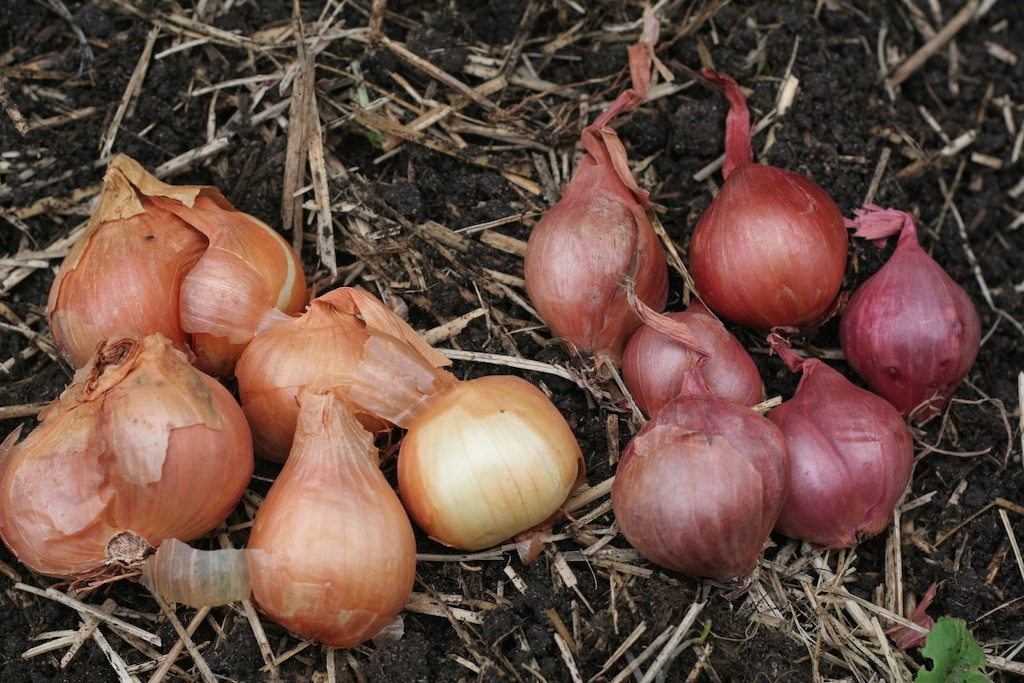
Golden and red shallot bulbs can be planted now.
Late Autumn and Winter mean misty moonlit evenings, frosty mornings, rain soaked days. Not the time of year to be planting vegetables you say, and certainly not exotic Asian vegetables or herbs. And you would be right about most of them, but not all. There are some hardy Asian plants that do really well in the cooler months. Don’t forget that although much of Asia hovers around the equator there are some regions that, due to their latitude, height or distance from the sea, experience extreme cold. So plants found growing in these regions are all suitable for planting in a Victorian winter. Continue Reading
Recent Topics
fruit gardening Gail Thomas Penny Woodward tomatoes garden herb salad seeds vegetable herbs pests vegetables organic garlic autumn recipes medicinal carrots rosemary cooking snails slugs Woodward pest-repellent plants zucchini berries artichoke compost chamomile apples squash Diggers bay comfrey