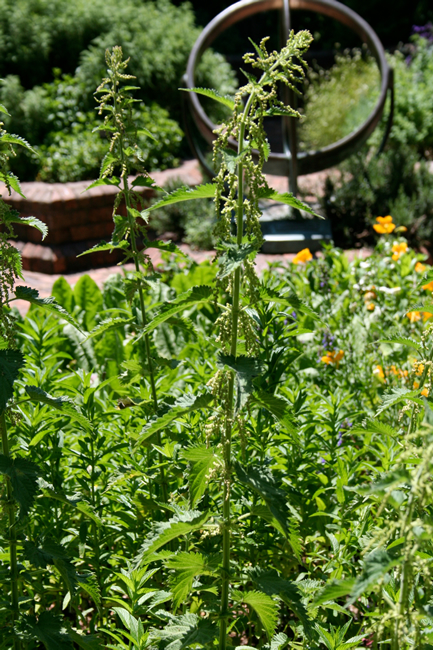
Nettle leaves have been used for centuries as a nourishing tonic
Of course not all weeds are edible. In fact some are very poisonous, but there are a number that not only taste good but are full of useful vitamins and minerals. Others can be used as remedies for simple complaints such as colds, cuts or stings. Most also have a fascinating history.
One of the most useful weeds found in Australian gardens or nearby wastelands is the common stinging nettle (Urtica dioica). Before you recoil in horror I’m not suggesting anyone use them in the way the Romans did, who when they first came to England were advised to flog themselves with nettles to get their circulation moving on cold English mornings. Life must have been considerably harder then. Flogging with nettles or ‘urtication’ is still sometimes recommended as a treatment for arthritis or rheumatism. At the very least nettles should be pulled out (wearing gloves) and added to the compost as they add minerals and speed the composting process. Drying or cooking de-activates the sting but if you do get stung, rub the affected part with a broken nettle stem to stop the pain. Read more